When you decide to partner with new manufacturing partners, learning how to compare hair extension samples correctly is the single most critical step in protecting your brand's reputation. Many B2B buyers fall into the trap of choosing the silkiest sample straight out of the box, only to face customer complaints about tangling a few weeks after launching. Through my years of experience working with high-end human hair extension suppliers and clients, I have seen how initial smoothness can sometimes mask underlying quality issues.
To compare hair extension samples effectively, evaluate them beyond initial touch by conducting a standardized wash test, checking cuticle alignment, analyzing length-to-weight ratio for end fullness, and testing chemical processing resilience. Prioritize long-term wear performance over factory-applied silicone coatings, ensuring the hair maintains its texture, direction, and natural luster after multiple washes.

Evaluating wholesale hair samples requires a methodical testing framework rather than quick surface impressions. Here is my professional guide on how salon brands and wholesale distributors inspect factory samples to ensure long-term product consistency.
Why Is the Softest Hair Extension Sample Not Always the Best?
First-time buyers often assume that the slickest, highest-shine hair sample represents superior quality. In reality, relying solely on initial touch leads buyers to select over-processed hair that degrades rapidly after a few washes.
Softness in unboxed samples often stems from heavy industrial silicone coatings applied by manufacturers to mask lower-grade, acid-washed hair. True high-quality Remy hair possesses natural texture and slight resistance, retaining its natural cuticle structure and strength through months of daily wear rather than losing its luster overnight.

The Silicone Coating Trap Exposed
In our factory, we frequently receive competitor samples sent by clients asking us to duplicate their hand-feel. When I feel an extraordinarily slippery hair strands, my immediate instinct is caution.
Low-cost hair processing plants immerse raw hair in aggressive acid baths to strip misaligned cuticles. This process removes the outer layer of the hair shaft entirely, leaving the remaining core weak and porous. To hide this damage, factories coat the strands in heavy silicone oil.
Factory Acid Bath -> Cuticle Stripped -> Hair Weakened -> Heavy Silicone Applied -> Fake SoftnessWhen a buyer touches this sample, it feels luxurious. However, once your end customer washes the hair at home, that silicone layer rinses away. The stripped hair underneath mats, tangles, and turns coarse within days.
| Surface Feature | Heavily Coated Sample | Raw Cuticle Remy Sample |
|---|---|---|
| Initial Touch | Extremely slippery, glass-like shine | Naturally smooth with subtle friction |
| Cuticle Condition | Stripped, damaged, or melted | 100% intact, uni-directional |
| Post-Wash Behavior | Frizzy, tangled, dry | Retains soft texture and natural movement |
| Lifespan | 1 to 2 months | 9 to 12+ months (with proper care) |
When you compare hair extension samples, do not let factory finishes deceive you. True premium human hair feels silky because the cuticle scales lay flat in one direction, not because it was drowned in chemical softeners.
How Does the Washing Test Reveal True Quality in Hair Extension Samples?
A hair sample can look flawless in factory packaging, but water and clarifying shampoo reveal its true underlying grade. Skipping the wash test is the single biggest mistake procurement managers make.
A rigorous wash test strips away temporary cosmetic coatings to expose the baseline hair quality of your sample. Washing reveals whether strands swell, lose structural elasticity, mat due to reversed cuticles, or bleed excessive dye, giving you a clear picture of how the product performs in the hands of salon clients.
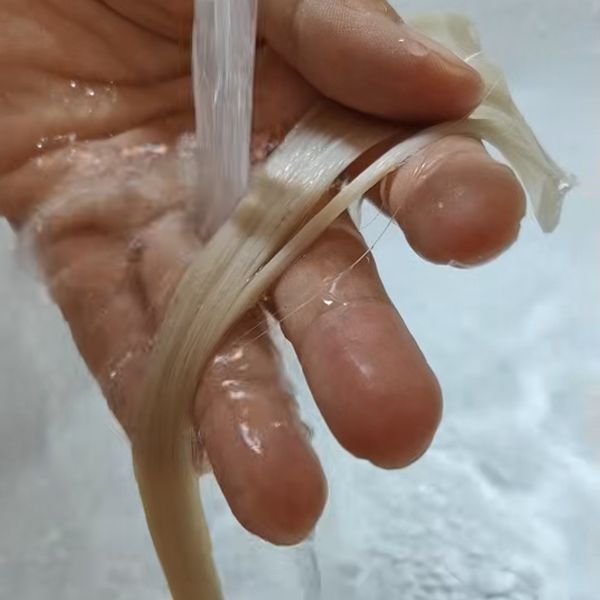
My 4-Step Wash Protocol
When I evaluate hair batches in our QC facility, I put every sample through an unsparing washing protocol before approving bulk production:
- Clarifying Wash: Wash the hair with a gentle clarifying shampoo and avoid heavy conditioners or oils during the first test. After drying, check whether it remains soft, manageable, and naturally shiny, or becomes dry, puffy, or tangled.
- Check the Cuticle Direction and Retention: While wet, slide your fingers from root to tip, then from tip to root. If the hair feels smooth downward but has some resistance upward, the cuticles are likely retained and mostly aligned; if both directions feel equally smooth, the cuticles may have been heavily removed through acid treatment. Repeat the wash test several times, as recurring tangling may indicate that some strands are mixed in the wrong direction.
- Natural Air Drying: Let the sample air-dry without oils, blow-drying, or styling products. Observe whether it keeps a natural texture and movement or becomes frizzy, stiff, dry, or uneven.
How Should You Inspect Fullness and Weight Distribution in Hair Extension Samples?
Two hair extension samples can weigh exactly 100 grams on a scale yet look completely different when installed on a client's head. Evaluating fullness requires looking beyond gross weight to inspect long-to-short hair ratios.
To accurately inspect weight distribution when comparing hair extension samples, measure the density from the top seam down to the ends. Premium suppliers maintain high double-drawn ratios with thick, healthy tips, while budget suppliers reduce costs by filling the mid-length with short strands, creating thin, stringy ends.
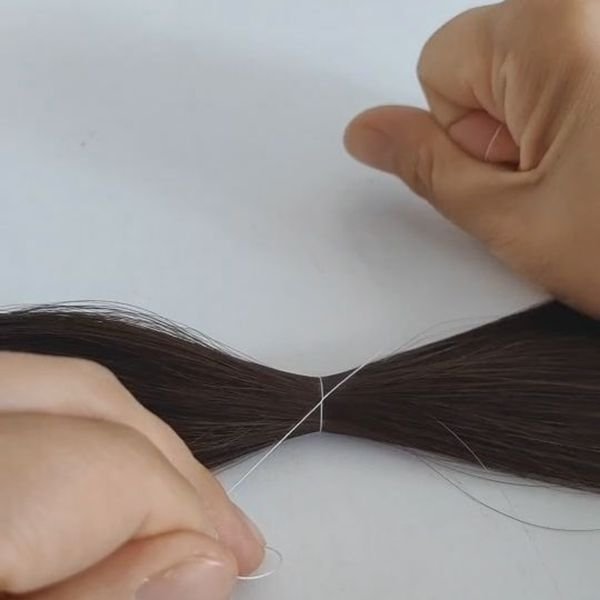
Understanding Drawn Ratios and Cost Structures
Raw hair naturally grows in varying lengths. To make hair extensions, factories sort raw ponytail hair into specific length categories. The percentage of maximum-length hair in a bundle determines its ratio and cost:
- Single Drawn Hair: Contains roughly 15–20% full-length strands, with the rest made of shorter filler strands. The ends appear thin, requiring stylists to trim several inches off during installation.
- Double Drawn Hair: Contains 25–40% full-length strands. The density remains uniform from root to tip, giving clients full, voluminous hair without taper.
Single Drawn:  [ Top Thick ] ---> [ Mid Sparse ] ---> [ Bottom Thin ]
Double Drawn:  [ Top Thick ] ---> [ Mid Thick  ] ---> [ Bottom Full ]
For a detailed method of evaluating and measuring end fullness, refer to our guide: How to Evaluate the End Fullness of Hair Extensions.
How Do Testing Standards Differ Across Hair Extension Methods?
You cannot apply a single quality metric across every product category. Each extension format presents unique technical failure points that require specific verification.
Different extension application methods require specialized evaluation criteria during sample testing. Clip-ins require inspection of stitching strength and clip durability, while tape-ins, keratin bonds, and wefts require testing for adhesive longevity, bond melting behavior, shedding resistance, and seam thickness.
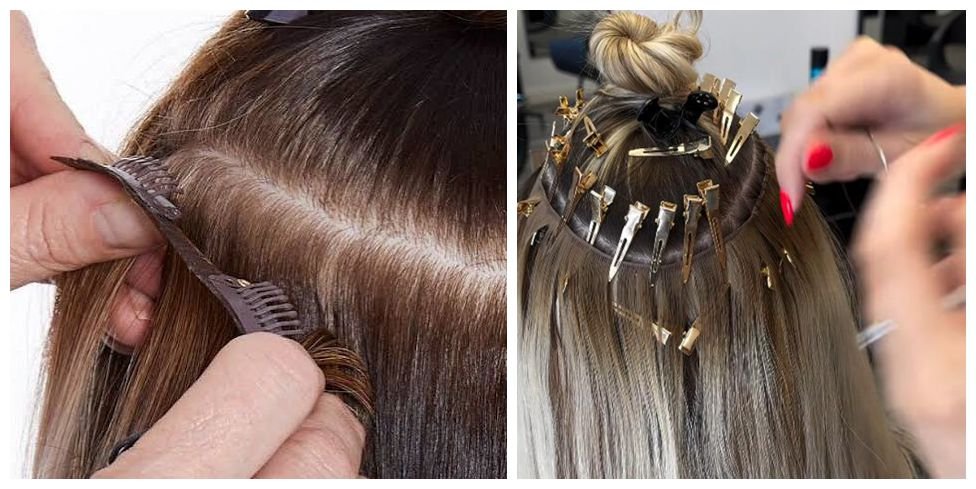
Product-Specific Inspection Guidelines
When our team prepares sample shipments for OEM partners, we inspect different construction parameters based on the extension method:
1. Tape-In Extensions
- Polyurethane Seam Quality: Check if the PU tape tab is flexible, flat, and shed-free. Stiff or thick PU tabs cause discomfort against the client's scalp.
- Adhesive Strength: Apply the tape sample to a test hair swatch, wait 24 hours, and perform a pull test. The adhesive should hold securely without sliding or leaving sticky residue during removal.
2. Keratin Pre-Bonded (I-Tip, Flat-Tip, K-Tip)
- Bond Firmness: Pinch the keratin tip hard. It should feel firm, dry, and clean, without releasing loose hair strands under tension.
3. Hand-Tied & Genius Wefts
- Weft Construction & Shedding: The weft seam should look clean, neat, soft and evenly finished. Most importantly, the hair should remain securely attached with minimal shedding during washing, brushing, and normal wear.
What Are the Cost-Cutting Red Flags in Low-Priced Hair Extension Samples?
When a supplier offers prices well below the market average, they are compromising somewhere in their production chain. These compromises rarely show up in the initial sample box; they surface weeks later on your end customers' heads.
Low-priced hair suppliers reduce costs by mixing non-Remy cuticle hair with Remy strands, over-bleaching raw materials to speed up processing, and skimping on length ratios. These practices lead to rapid texture degradation, severe matting, and loss of hair elasticity after initial client wear.
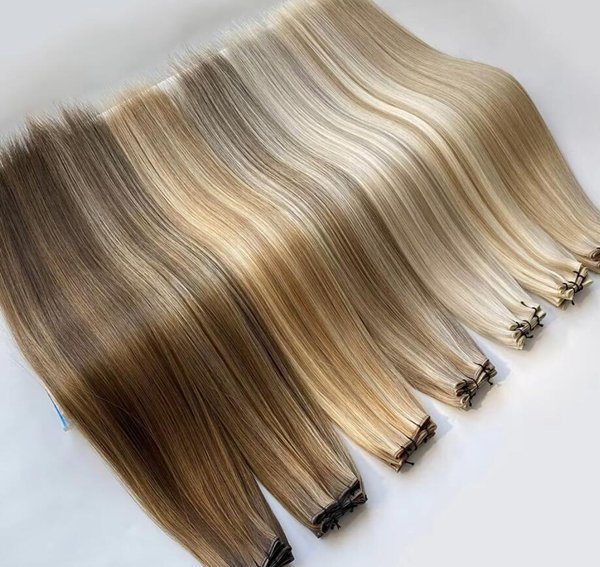
My Procurement Philosophy: The best sample is never the one that looks prettiest on day one inside a luxury box. The best sample is the one that stays soft, pliable, and beautiful after 20 washes, keeping your retail clients happy and reordering month after month.
Conclusion
Learning how to compare hair extension samples requires shifting your focus from initial surface touch to long-term structural integrity. By implementing a strict evaluation process—including clarifying wash tests, bleach resilience checks, drawn-ratio analysis, and method-specific hardware inspections—you protect your business from costly customer returns and supplier inconsistency.
We manufacture high-grade 100% human hair extensions designed to maintain their soft, natural texture, full ends, and luster over extended wear. If you are looking for a reliable OEM/ODM partner to supply consistent, premium hair products for your brand, contact my team today to order your test samples.