Finding the right balance between volume and cost in wholesale sourcing is a constant struggle for growing hair brands. Many buyers purchase what they believe is premium hair, only to face client complaints about thin, wispy ends that look cheap. Selecting the right option between single drawn vs double drawn hair extensions can make or break your brand's reputation and your profit margins.
The core difference between single drawn vs double drawn hair extensions is the fullness of the hair ends, also known as end fullness. Single drawn extensions contain multiple hair lengths to mimic natural, tapered hair growth. Double drawn extensions have shorter hairs manually removed, resulting in uniform thickness and volume from roots to ends.
As a hair manufacturer with years of experience supplying top-tier brands globally, I see wholesale buyers struggle with these terms daily. Let me pull back the curtain on how these extensions are made, why true double drawn is incredibly rare, and how you can choose the perfect standard for your brand.
What is the Real Difference Between Single Drawn vs Double Drawn Hair Extensions?
Buyers often get confused by the endless marketing jargon used by suppliers who promise the world. You want to give your clients beautiful, thick hair without overpaying for hyped-up industry terms.
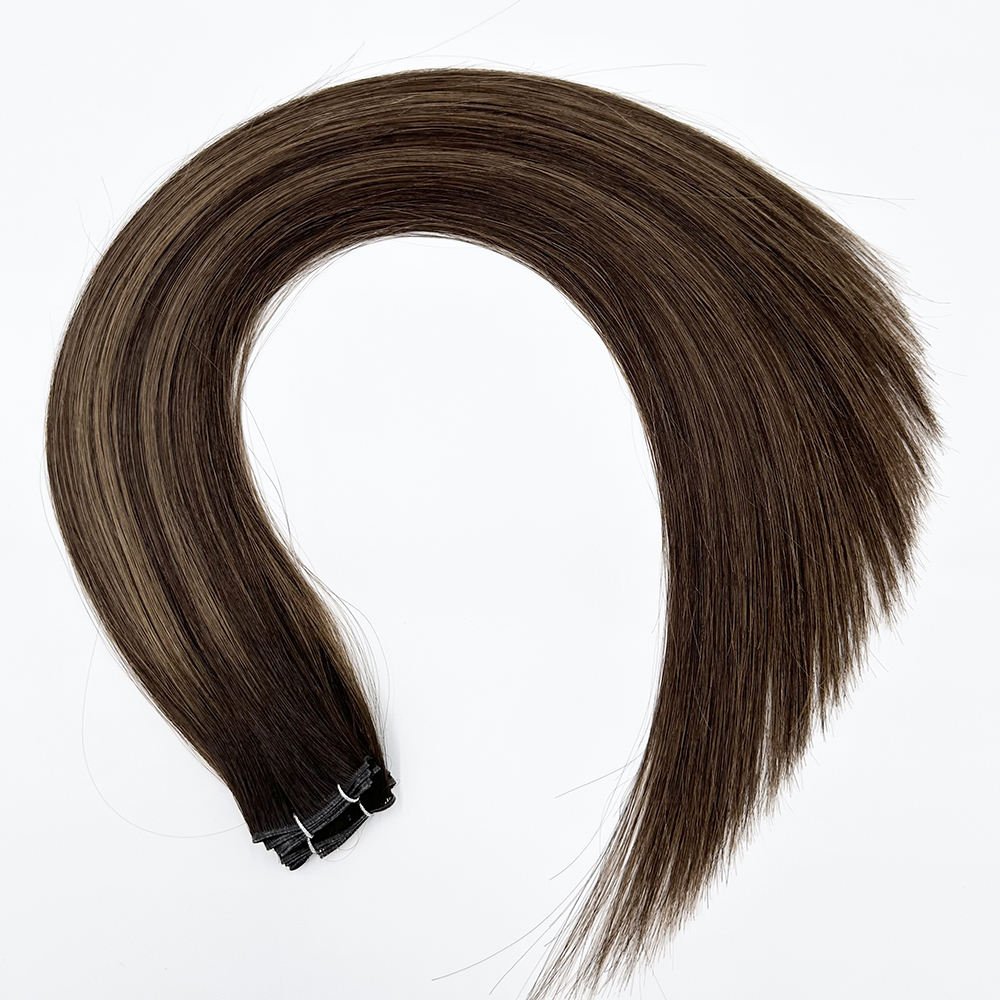
The real difference lies in "end fullness" or the ratio of long hair strands inside a single bundle. Single drawn hair looks highly natural because it tapers toward the bottom, mimicking normal human hair. Double drawn hair looks exceptionally dense and thick because almost all strands share the same maximum length.
The Natural Look vs. The Blunt Volume
When you look at natural human hair growing from a scalp, it is never perfectly thick at the bottom. Due to natural shedding and growth cycles[^1], we all have shorter hairs mixed with longer ones. Single drawn hair extensions replicate this exact structure. We wash and process the hair, but we do not remove the shorter filler hairs. This results in a tapered, lightweight finish that blends seamlessly into a client's natural hair without requiring heavy layering.
Double drawn hair, on the other hand, undergoes a rigorous manual sorting process. Workers draw the hair through heavy metal combs (called hackles) multiple times to pull out the shorter strands. This leaves a bundle where the majority of the strands are the exact same length. When installed, it creates a very thick, blunt, and voluminous look that is highly popular for red-carpet styles and dramatic transformations.
| Feature | Single Drawn Hair | Double Drawn Hair |
|---|---|---|
| End Fullness | Moderate to thin (tapered) | Extremely thick (blunt ends) |
| Short Hair Content | High (naturally occurring) | Very low (manually removed) |
| Weight Distribution | Heavy at the top, light at the ends | Uniform weight from top to bottom |
| Blending Effort | Easy for fine or layered hair | Requires cutting to blend blunt edges |
| Relative Cost | Economical | Expensive |
Why is True Single Drawn vs Double Drawn Hair Extensions Pricing So Different?
You might see cheap "double drawn" hair listed all over wholesale websites. However, importing these cheap bundles often leads to a disappointing surprise because true double drawn hair requires immense resources to manufacture.
The price difference exists because genuine double drawn hair extensions require massive amounts of raw, long-hair material to produce. Bundles must be hand-sorted multiple times to pull out shorter hairs, leaving only the longest strands, which significantly raises raw material costs and manufacturing waste.
The Manufacturing Reality of Raw Material Waste
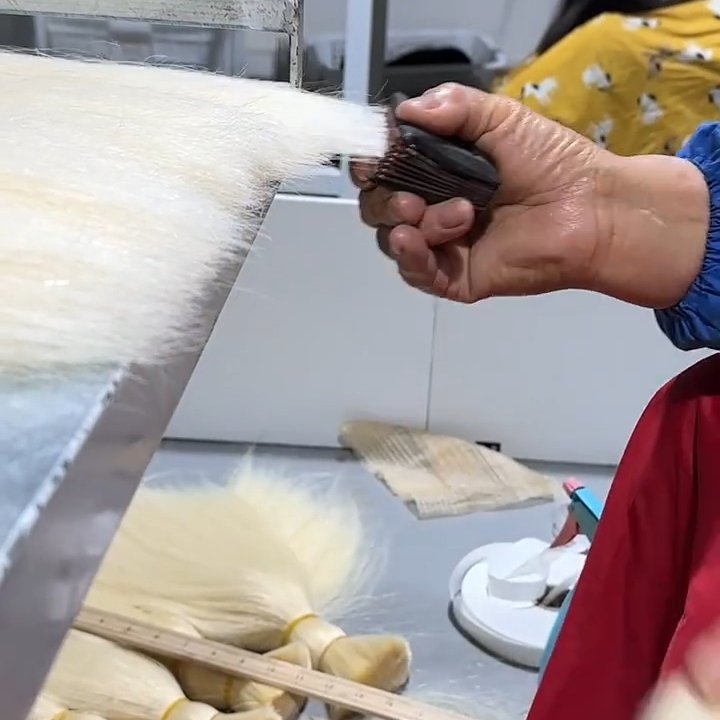
To understand why genuine double drawn hair costs so much, you have to understand the factory's raw material sourcing. When we collect raw human hair—usually in the form of healthy donor ponytails—the strands are never the same length. A raw 20-inch ponytail naturally contains 12-inch, 14-inch, and 16-inch strands inside it, or even shorter length 10-inch, 8-inch.
If workers sort that raw ponytail to make a true 20-inch double drawn bundle, they must discard up to 50% or more of the shorter hairs. Those discarded shorter hairs represent a massive loss of material weight. Because we pay for raw hair by total weight, discarding half of it means the remaining long strands automatically double in cost.
Furthermore, the manual labor required to draw the hair through hackles multiple times is intense. It requires highly trained workers to ensure the cuticle direction remains completely intact during the sorting process. If a factory tries to sell you cheap "double drawn" hair, they are likely doing one of two things:
- Blending synthetic fibers: They mix in heat-resistant synthetic strands to bulk up the ends cheaply.
- Padding with short hair: They sell you a bundle with a low ratio of long hair but call it "double drawn" anyway.
What Metrics Should Wholesale Buyers Track Instead of Just Labels?
Relying on basic terms like "double drawn" is a risky way to manage your supply chain. Smart wholesale buyers know that factory terminology varies wildly from one supplier to another.
Wholesale buyers should focus on precise metrics like "long hair ratio" rather than generic labels. Asking for the exact percentage of the long hair strands in a bundle ensures you receive consistent quality regardless of the supplier's marketing terms.
Understanding the "Long Hair Ratio"
In my factory, we do not just use the terms "single drawn" or "double drawn" because they are too subjective. Instead, we use a percentage-based rating system, which is the standard among high-end Chinese manufacturers[^2]. This is often referred to as the "draw" system or "long hair ratio."
For example, for a 20-inch hair bundle, many factories do not measure the long hair ratio at the full 20-inch length. Instead, they typically measure it at around 18 inches (approximately 2 inches shorter than the stated length).
- **15% Long Hair Ratio: Only 15% of the strands actually reach 18 inches. The remaining 85% are shorter and may range anywhere from 6 inches up to just under 18 inches.
- **30% Long Hair Ratio: About 30% of the strands reach 18 inches. The remaining 70% are shorter, typically ranging from 8 inches up to just under 18 inches.
- **100% Long Hair Ratio: Every strand reaches at least 18 inches, creating the fullest possible bundle with virtually no short hairs mixed in, which is true double drawn.
Pro Tip from a Manufacturer: When negotiating with a new supplier, never ask: "Is this hair double drawn?" They will always say yes. Instead, ask: "What is the exact percentage of the longest hair length in this bundle?" If they are a real factory, they will give you a precise percentage (e.g., 15%, 30% or others).
How to Inspect Samples for End Fullness
When you receive samples from a potential supplier, perform these three simple tests:
- The Pinch Test: Pinch the top of the bundle near the bond or weft, then pinch the bottom 2 inches of the bundle. Compare the thickness. A true double drawn bundle will feel almost as thick at the bottom as it does at the top.
- The Short Hair Pull: Gently pull the shortest hairs out from the top of the bundle. If you can pull out dozens of short strands easily, this is actually single drawn.
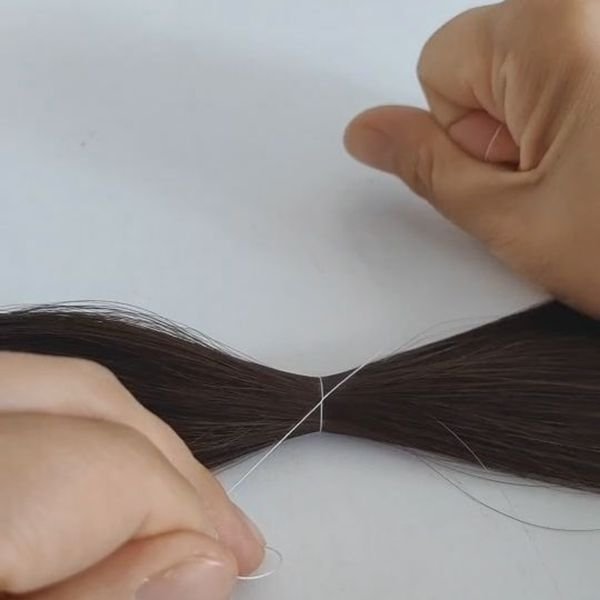
- The String Measurement Test: This is the objective method commonly used by many factories to evaluate long hair ratio. Instead of relying on appearance alone, it gives you measurable data that can be compared between suppliers.
You will need a non-elastic string, a ruler, and a calculator.
- Step 1: Wrap the string tightly around the bundle 3–4 inches below the root. This position avoids measuring the return hairs near the weft or hand-tied area and represents the bundle's total hair volume. Measure the length of the string and record it as Value A.
- Step 2: For a 20-inch hair bundle, wrap the string tightly around the bundle at approximately the 17.5–18 inch position (about 2–2.5 inches from the ends). Measure the string again and record it as Value B.
-
Step 3: Calculate the fullness ratio. First calculate: C = B ÷ A Then square the result: Fullness Ratio = C²
How to Choose the Right Single Drawn vs Double Drawn Hair Extensions for Your Brand?
There is no single "best" choice when choosing between these hair types. Your decision must align perfectly with your business model, target demographic, and retail pricing strategy.
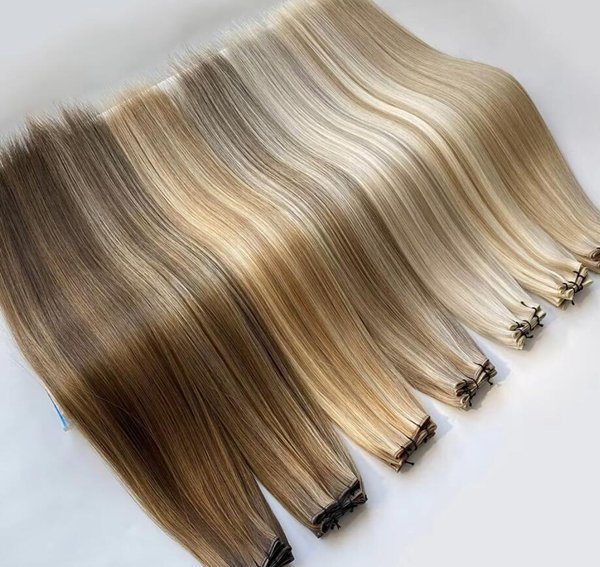
To choose the right standard, match the hair's end fullness with your brand positioning and target price point. High-end salon brands require thicker ends, while mainstream retail brands often prefer a natural taper to keep costs competitive and maximize profit margins.
Matching Your Sourcing to Your Target Customer
To help you decide which ratio fits your brand, I have broken down the three most common brand profiles I work with:
1. The Ultra-Luxury Salon Brand
If your target customers are high-income clients who visit luxury salons, you must offer double drawn hair (typically a 30% to 45% long hair ratio). These clients pay premium prices for instant volume. They do not want to see their stylist cut off three inches of thin ends after installing the extensions just to make them look healthy.
2. The Mainstream Premium Retailer
If you run an online store targeting everyday consumers who want high-quality hair for daily wear, I recommend a medium-to-high ratio (around 25% to 30%). This is the sweet spot. It offers a beautiful, healthy-looking thickness at the ends without the extreme price tag of luxury double drawn hair. It is versatile enough for almost all hair types.
3. The Budget-Friendly/Clip-In Brand
For temporary extension lines like budget clip-ins or ponytails[^3], single drawn hair (15% to 25% ratio) is often the best choice. Temporary users usually want a natural blend that matches their own hair, which is naturally tapered. Using single drawn hair allows you to keep your retail prices highly competitive while still offering 100% human hair.
Frequently Asked Questions
Can you cut single drawn hair to make it look like double drawn?
Yes, you can trim the ends of single drawn hair extensions by 2 to 3 inches to remove the thin, tapered ends. This will make the ends look much thicker, but you will lose overall length in the process.
Why does double drawn hair feel heavier to wear?
Double drawn hair has more mass at the bottom of the strands. Because there are more long hairs in the bundle, the weight is distributed evenly, which can feel heavier on fine natural hair compared to tapered single drawn hair.
Conclusion
When deciding between single drawn vs double drawn hair extensions, there is no right or wrong answer. Success in the wholesale hair industry comes from consistency. You do not need to chase "true double drawn" if your target market cannot afford it. Instead, focus on establishing a clear, consistent end fullness standard with a reliable manufacturer who won't change the hair ratio from batch to batch.
If you want to elevate your hair brand with consistent quality and custom long hair ratios, my factory in China is here to help. We specialize in producing premium human hair extensions with stable, transparent sourcing for global brands. Contact us today to discuss your custom specifications and request your sample kit.
[^1]: "What Are the Four Stages of Hair Growth?", https://www.healthline.com/health/stages-of-hair-growth. According to clinical dermatology resources, the human hair cycle consists of active growth (anagen), regression (catagen), and resting (telogen) phases, ensuring that hairs on a single scalp are always at different lengths. Evidence role: definition; source type: encyclopedia. Supports: the biological mechanism of hair shedding and growth cycles. [^2]: "China Hair Wigs And Extensions Market Size & Outlook", https://www.grandviewresearch.com/horizon/outlook/hair-wigs-and-extensions-market/china. According to international trade data, China remains the world's largest exporter of processed human hair products, accounting for a significant majority of global supply. Evidence role: statistic; source type: institution. Supports: China's position as a leading global hub for human hair processing. Scope note: While China dominates processing, raw hair is often sourced globally from countries like India before being refined. [^3]: "Clip-in Human Hair Extension Market Size, Share | Growth [2034]", https://www.fortunebusinessinsights.com/clip-in-human-hair-extension-market-113530. Market research reports indicate that the temporary hair extension segment, including clip-ins, is growing rapidly due to consumer demand for damage-free, DIY styling options. Evidence role: general_support; source type: research. Supports: the market demand and consumer preference for temporary hair extensions like clip-ins. Scope note: Market dynamics vary by region and demographic preferences.